The Scandinavian Textile Initiative for Nature Action (STICA+) is an accountability and leadership initiative supporting the apparel and textile industry in improving its nature-related performance across key areas such as biodiversity, water stewardship, and waste.
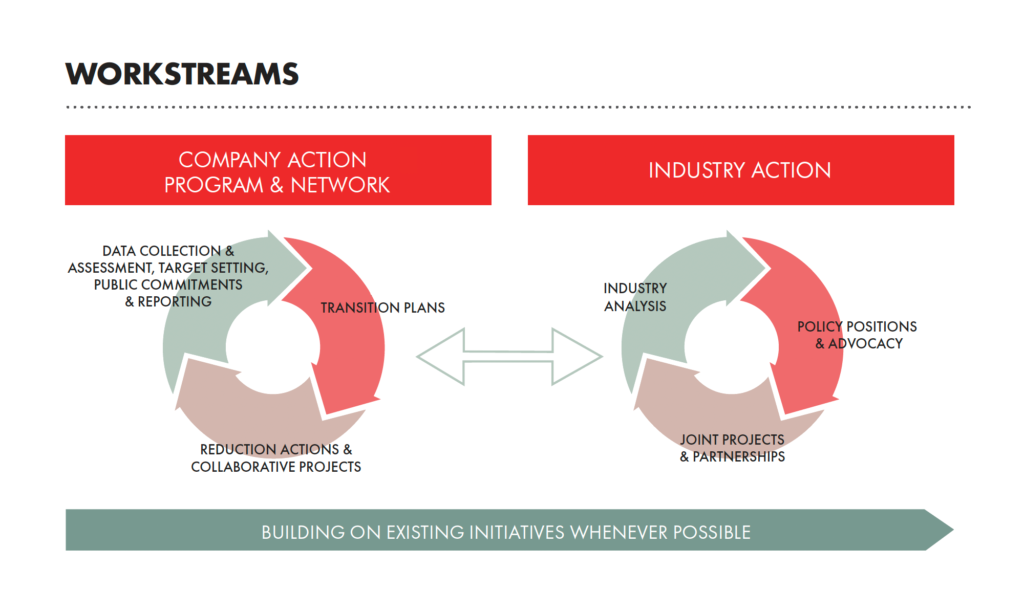
Through the STICA+ Company Nature Action Program, small to medium-sized (SME) apparel and textile brands and retailers are supported in setting credible targets, developing and implementing action plans, strengthening reporting, and engaging in collaborative projects and policy initiatives to drive industry-wide change.
STICA+ is currently a robust learning forum where members work with experts to develop guidelines, set targets, develop action plans, track and report on progress, and advocate towards policymakers. Although there are currently no reporting requirements, the ambition in the coming years is to develop internationally credible reporting standards and mechanisms so that companies can demonstrate their accountability and leadership, while integrating nature action into the core of their business.
Similar to STICA, companies participate in topic-specific webinars, receive coaching, and establish working groups — all to accelerate their learning and ensure they turn it into action.
Scroll down to read additional testimonials.
STICA+ supports members in addressing three critical environmental areas across their operations:
To cover the costs associated with the development and execution of the program, signatories are asked to invest a yearly fee:
20,000 SEK / 1,760 EUR for organizations with a yearly turnover of less than 150 Million SEK / 13 Million EUR
40,000 SEK / 3,520 EUR for organizations with a yearly turnover between 150-1,000 Million SEK / 13-88 Million EUR
45,000 SEK / 3,960 EUR for organizations with a yearly turnover over 1,000 Million SEK / 88 Million EUR
To find out more about the STICA+ Company Action Program, please contact Michael at michael@sustainablefashionacademy.org. When registering for a program, please refer to SFA’s Terms & Conditions.
If you have questions, we are here to help.
While STICA focuses solely on climate action, STICA+ takes a broader approach to nature action, covering biodiversity, water, and waste.
STICA requires signatories to meet rigorous standards, while STICA+ currently focuses on learning and development, with the ambition to create clear target-setting and reporting guidelines and structures, similar to STICA.
Participation in STICA is not required to join STICA+, but it is helpful.
Most of the STICA+ companies are members in other initiatives, such as Cascale, Textile Exchange, The Fashion Pact and EOG. When asked what makes STICA+ valuable, companies say that the structure makes it easier—particularly for small- to medium-sized (SME) brands and retailers—to actively engage, share challenges, and learn from peers facing similar realities. They also highlight that the STICA+ approach supports practical implementation, with a focus on translating knowledge into action. We highly recommend speaking with a member to hear their reasons for joining STICA+.
Each apparel and textile company’s nature action business case will look slightly different depending on products, sourcing base, and operations. However, at a broader level, nature action is increasingly important for business resilience, compliance, and long-term competitiveness.
Key areas include:
Resilience: Securing future access to key raw materials such as cotton, wool, and viscose in the context of climate change and ecosystem degradation.
Compliance: Preparing for evolving regulatory requirements, including mandatory EU reporting frameworks such as CSRD, and emerging legislation such as the EU Deforestation Regulation (EUDR).
Brand and reputational risk: Reducing exposure to risks linked to supply chains, including issues related to water depletion, pollution, and deforestation.
Operational efficiency: Improving resource efficiency, including reduced water use and lower chemical inputs in manufacturing processes, often resulting in cost savings.
Apparel and textile companies are increasingly expected to manage their impacts on biodiversity, water, and waste due to both EU legislation and global agreements. Key frameworks include:
European Sustainability Reporting Standards (ESRS / CSRD, CSDDD): Require reporting on biodiversity, water, pollution, waste, and circularity in addition to climate.
Convention on Biological Diversity (CBD): A global commitment to halt and reverse biodiversity loss by 2030.
EU Chemicals, Water, and Waste Directives: Include requirements for responsible chemical use, wastewater management, and waste reduction.
EU Deforestation Regulation (EUDR): A landmark law that prohibits products linked to deforestation or forest degradation from being placed on or exported from the EU market.
Participation in STICA+ helps companies prepare for compliance with these evolving regulations and integrate nature action into their business strategy.

STICA+ is designed for apparel and textile companies in Europe that want to take practical action on biodiversity, water, and waste. Companies of all sizes are welcome. Support is provided to ensure smaller companies can engage effectively, including access to tools, templates, and guidance.
The companies currently participating in STICA+ represent a broad range of segments and business models, from fashion and outdoor to workwear and home interiors, among others.
No, participation in STICA is not required to join STICA+. However, companies should demonstrate a strong commitment to sustainability and understand that participation involves both developing their own goals and contributing to the initiative’s development. STICA+ is intended as a long-term commitment.
Contact us if you would like to learn more!